STORIES OF CHANGE
Behind every project are people.
Survivors who found their voice, young people who chose to engage with a difficult history, and communities that chose healing over silence. These are their stories.
STORIES ABOUT “SURVIVORS & HEALING”
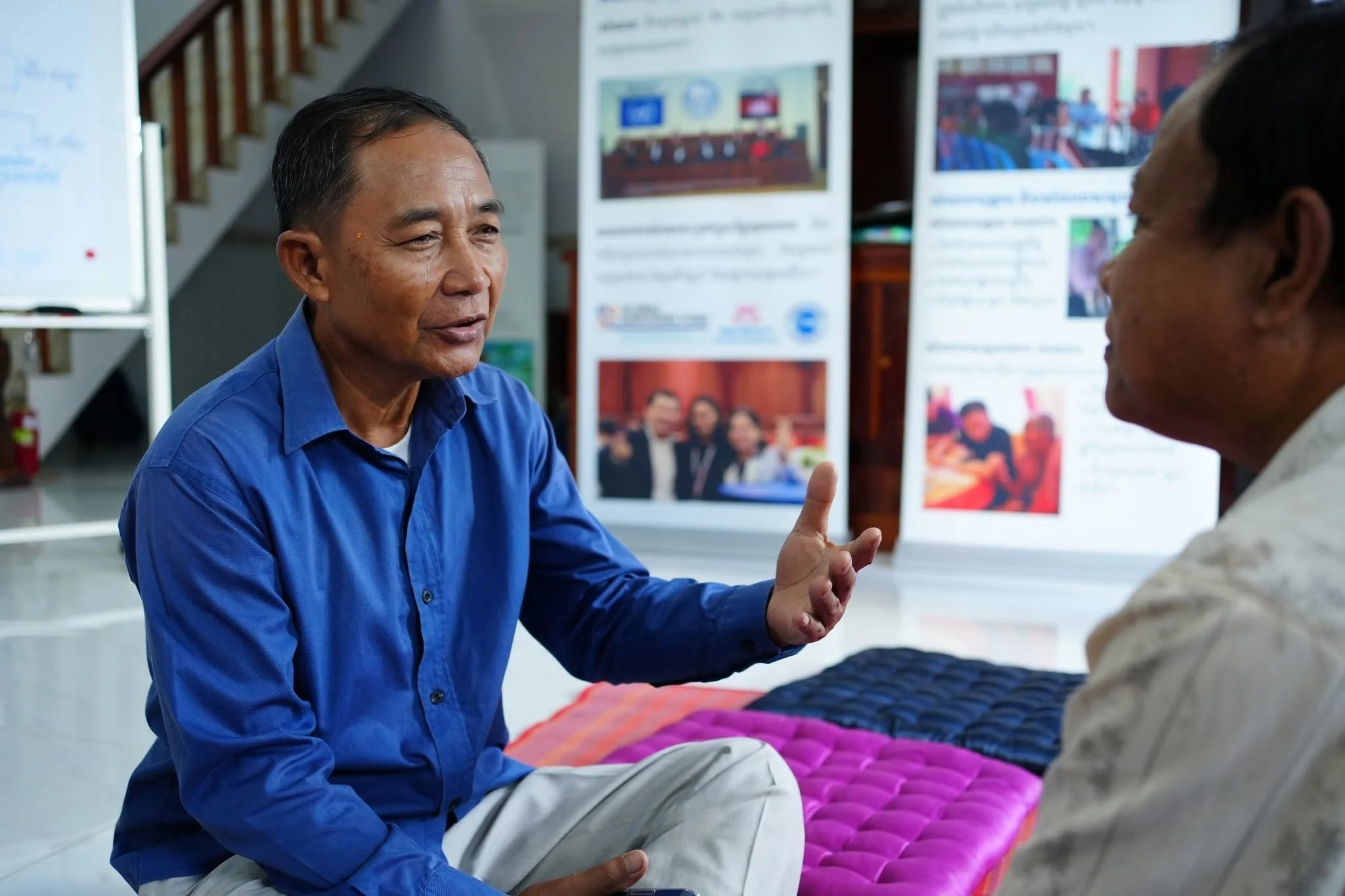
“I no longer feel troubled since I started working.”
Interim Reparative Measures Project
The Khmer Rouge years brought suffering that has stayed with us for a lifetime. Surviving it was its own kind of relief — but whenever the memories returned, I felt trapped inside them again. When the team from Kdei Karuna came and supported me, I was finally able to set those memories down. I am happy for the help I received — happy, very happy.
Mr. Nget Som, 78, survivor of the Khmer Rouge regime
A Journey to Courage and Hope
Interim Reparative Measures Project
"Growing up as a young girl during the Khmer Rouge period, I never wanted to recall those painful memories. That regime caused me immense suffering and hardship, and life was extremely difficult."
Ms. Moung Khly
Like many survivors of the Khmer Rouge era, Ms. Moung Khly carried the weight of that history long after the regime ended - living with anxiety, emotional suffering, and trauma that time alone could not heal.
Through the Interim Reparative Measures project, she found a path forward. Participating in health support services, older people's association meetings, and skills training, she gradually rebuilt her confidence and her connections to others. Individual reparative measures gave her the means to improve her family's livelihood, while counseling and emotional support gave her space to process experiences she had long kept buried.
Today, Ms. Moung Khly speaks of her journey not with bitterness, but with courage and hope - a testament to what recognition, support, and solidarity can make possible.
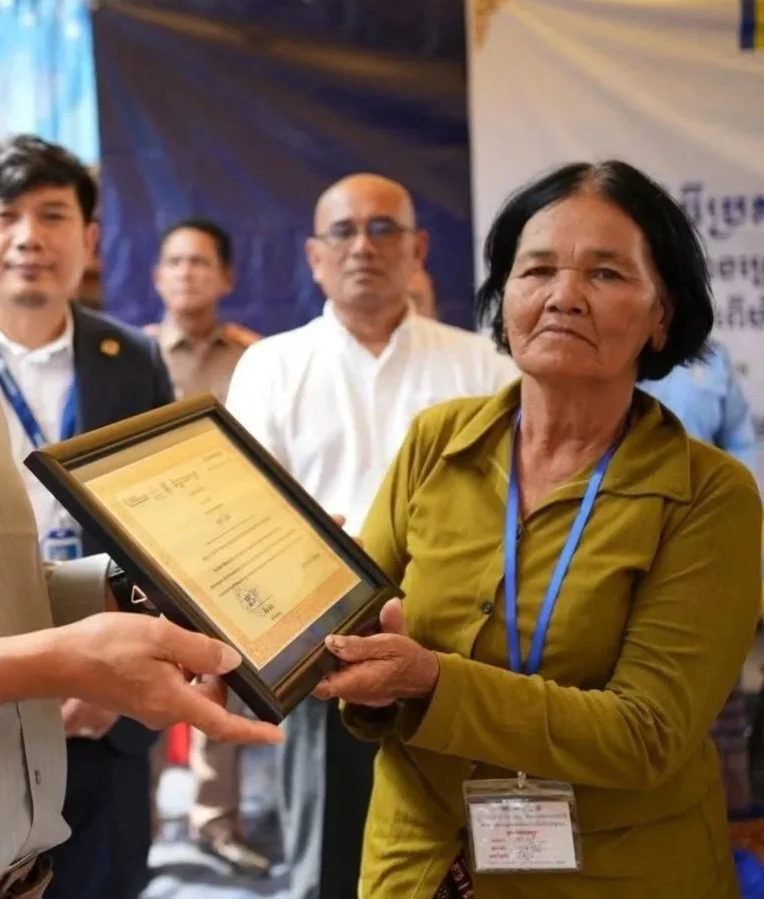
"The anger has slowly faded - it is almost gone now."
Interim Reparative Measures Project
Three years, eight months, and twenty days. Ms. Phol Nang, 69, still counts the time she lived under the Khmer Rouge regime. The suffering, she says, was beyond anything imaginable.
"In all my life, I had never experienced hardship like that."
For Mr. Vong Hean, 73, the memories are equally unshakeable. He remembers people dying every day - with no courts, no laws, no justice. He remembers hard labor, people tied up with ropes and killed, and the years when he should have been happy filled instead with death and hunger.
"During the years when I should have been happy, I suffered terribly. All I knew was hard labor. I saw only death, never happiness, and there was nothing to eat. I still remember. It stays heavy in my heart."
For Ms. Yeay Soth, 82, the losses were deeply personal. Several of her siblings died during that time. She still does not know where they were taken.
Decades later, all three survivors live in Treuy Koh Commune, Kampot. Through the Interim Reparative Measures project, they have found something they had not expected - not just practical support, but a space to be heard, and a slow, quiet release from the weight they had carried alone for so long.
"I still carry anger," Mr. Vong Hean says, "but Kdei Karuna has helped me work through some of these issues and ease my mind. The anger has slowly faded over time - it is almost gone now."
Ms. Yeay Soth's message for the future is simple: "We should not hate or hold resentment toward one another. We need to learn to love each other, whether near or far."
"Since I started working, I no longer feel so troubled."
Interim Reparative Measures Project
Mr. Sok Sam is 70 years old. He lives in Treuy Koh Commune, Kampot City - and like many survivors of the Khmer Rouge era, he carried the weight of those years long after they ended.
"The Khmer Rouge regime caused suffering and hardship that still affect us today. When we came through that period and survived it, we finally felt some relief. But whenever I think about those experiences, I feel like I am stuck in them."
Through the Interim Reparative Measures project, Mr. Sok Sam received support to start a small poultry business - building a chicken coop, receiving chickens and feed, and gradually expanding what he had built. It was practical support. But it was also something more.
"Since I started working, I no longer feel so troubled. Having work has improved my mood and made me feel better than when I had no work."
Today, his chickens are almost ready to sell. His livelihood is growing. And so is his sense of hope.
"I feel more hopeful about the future because the support we received helped us get started. Seeing what we have built grow and develop makes me happy."
"I built my own small business."
Interim Reparative Measures Project
Before joining the Interim Reparative Measures project, life felt impossible. Constant distress, no hope, and the long shadow of experiences that had never been acknowledged.
Through the project, that began to change. With counseling and emotional support and individual reparative measures - financial support that recognized the harm survivors had experienced and gave them the means to move forward - one survivor found the confidence and the means to take a step she had not imagined possible: building her own small business.
"Before joining the project, I lived with constant distress and no hope. Since participating, I have gained peace of mind, confidence, and mental resilience. The support I received allowed me to build my own small business, which has significantly improved my family's livelihood and happiness. This support exceeded my expectations and transformed my initial doubts into confidence."
Her story is not only about a business. It is about what becomes possible when survivors are seen, supported, and given the space to rebuild on their own terms.
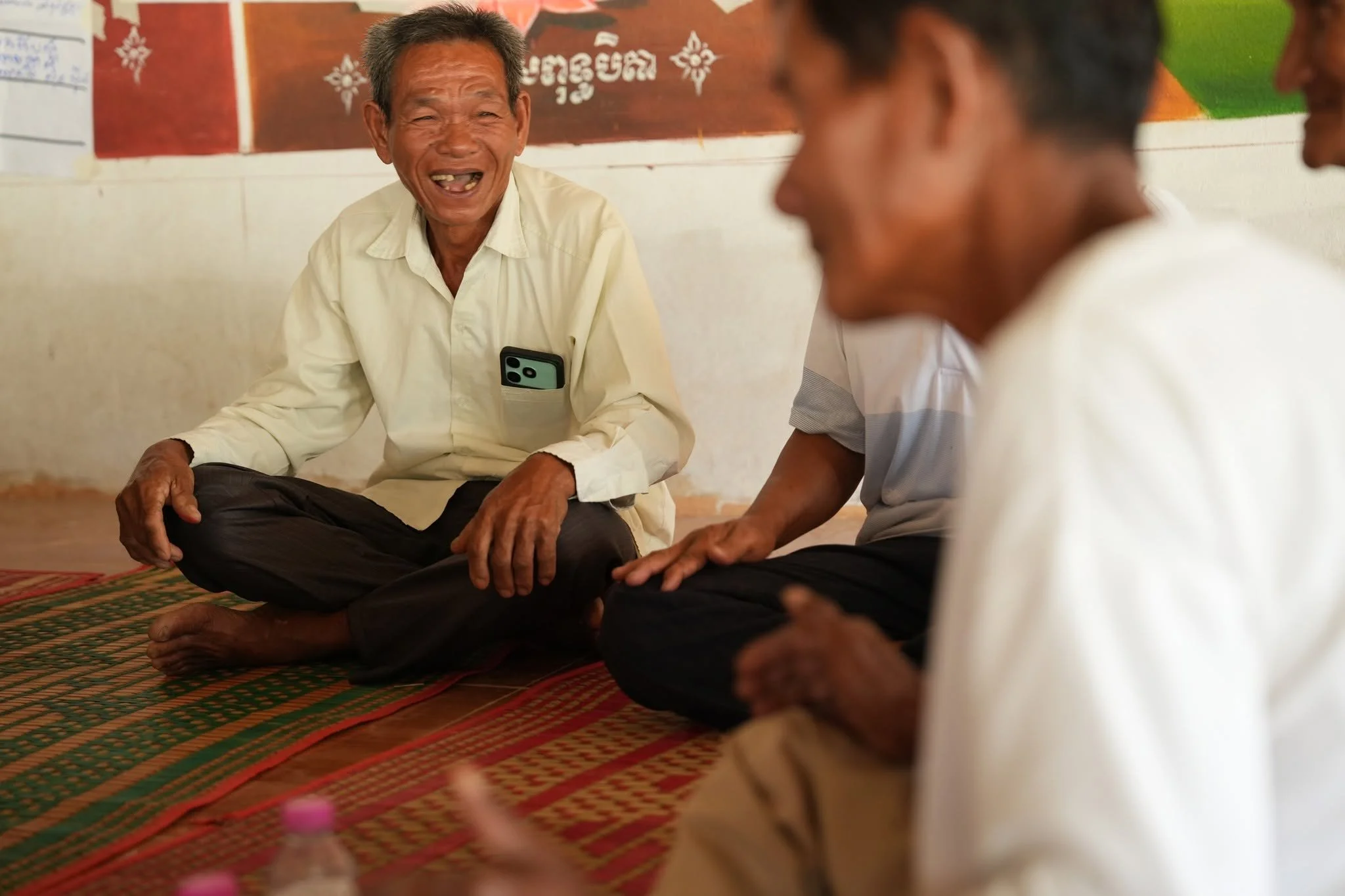
"My mind was not mindful - but with Kdei Karuna, I have improved."
Memory, Dialogue & Transitional Justice Project
Ms. Sin Sima is 66 years old. She lives in Cheu Teal village, Ma'roam Commune, Kampot - the same province where, decades earlier, she survived forced labour, a forced marriage, and the loss of her brother and parents under the Khmer Rouge regime.
Today, she is a farmer, a commune council member, and one of only fifteen people in her area selected as a local facilitator by Kdei Karuna. It is a role she takes seriously. "I liked the work of Kdei Karuna since fifteen local people were chosen as local facilitators. Before, my mind was not mindful, but when I joined and talked about my experience from time to time, it has improved."
Through her involvement with Kdei Karuna, Ms. Sin Sima found something she had not expected - the ability to process her own trauma while supporting others. She now regularly speaks with women in her community about reproductive health, physical health, and mental health, drawing on her own experience to help others recognise and manage theirs.
She has even noticed a shift in herself when it comes to the past she once could not face. "I didn't watch the Khmer Rouge tribunal hearings on TV - whenever I saw them, I switched the channel because I could not control my emotions. But I can manage that feeling now, since I joined Kdei Karuna's events."
Her message to the younger generation is direct: learn from history, think critically, and never let yourself be swayed by propaganda again. "Allow me to share a message to the young generations of today: do not be chained to the past. Question what is presented to you, so that you can make informed decisions for yourselves."
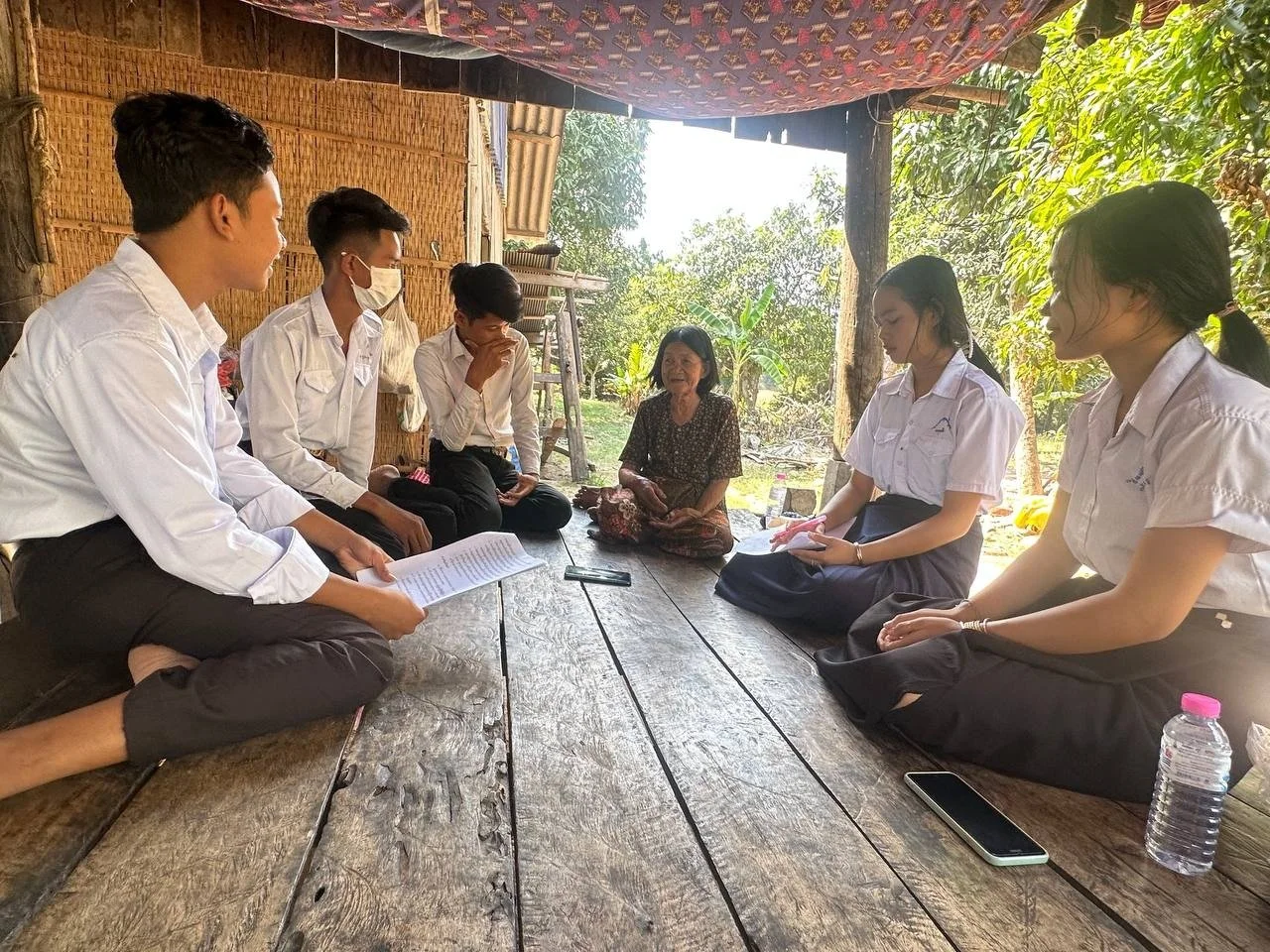
"My grandchild told my story."
Intergenerational Dialogue & Traditional Healing
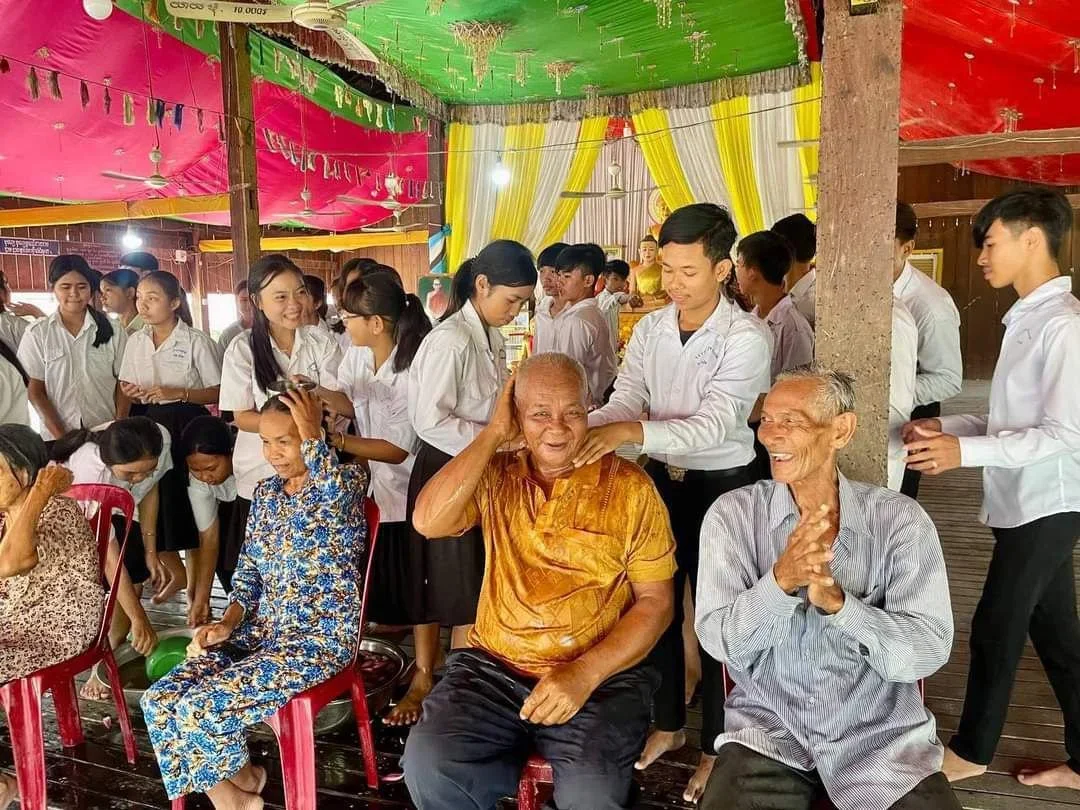
For a long time, what I lived through under the Khmer Rouge stayed with me quietly. Then my own grandchild wrote down my story and read it aloud - to other young people, and before the monks. Seeing the next generation listen to what I had endured, I felt lighter. I feel better now.
Ms. Yin Sareth, 60 - Khmer Rouge survivor, Kampot Province
STOries ABOUT “Gender Justice, Youth & Education”
Young people leading the conversation on gender-based violence
Gender Justice through Learning and Reflecting on SGBV
In Samlot district, Battambang, it was not a teacher or an NGO worker who led the conversation - it was the students themselves.
The Youth Friendly Club organized an awareness-raising session on gender-based violence and its impacts for 32 community members, the majority of them young women. Drawing on what they had learned through Kdei Karuna's coaching and their own research, club members facilitated a discussion that connected the history of the Khmer Rouge era to the realities of their own community today.
For participants, the session opened up new understanding - and new questions.
"I learned clearly about the terms of sex, gender, and sexual and gender-based violence during the Khmer Rouge and its impacts on the survivors."
Sav Sok Srey Neang, Grade 10, Samlot High School
"Although I have learned about this topic before, this is new knowledge for me."
Soth Visal, Grade 10, Samlot High School
"I choose to keep leading."
Promoting Gender Justice through Learning, Skill Sharing & Practice
For me, leading our youth club is a choice I make gladly. I am committed to continuing - working with our members and local facilitators to shape our 2026 activity plan, and to keep promoting gender equality and preventing gender-based violence in my community. What began as taking part has become something I want to carry forward.
Ms. Samnang Sopheap — youth club leader, Samlot District, Battambang Province
"Newly elected, ready to learn — and to share."
Promoting Gender Justice through Learning, Skill Sharing & Practice
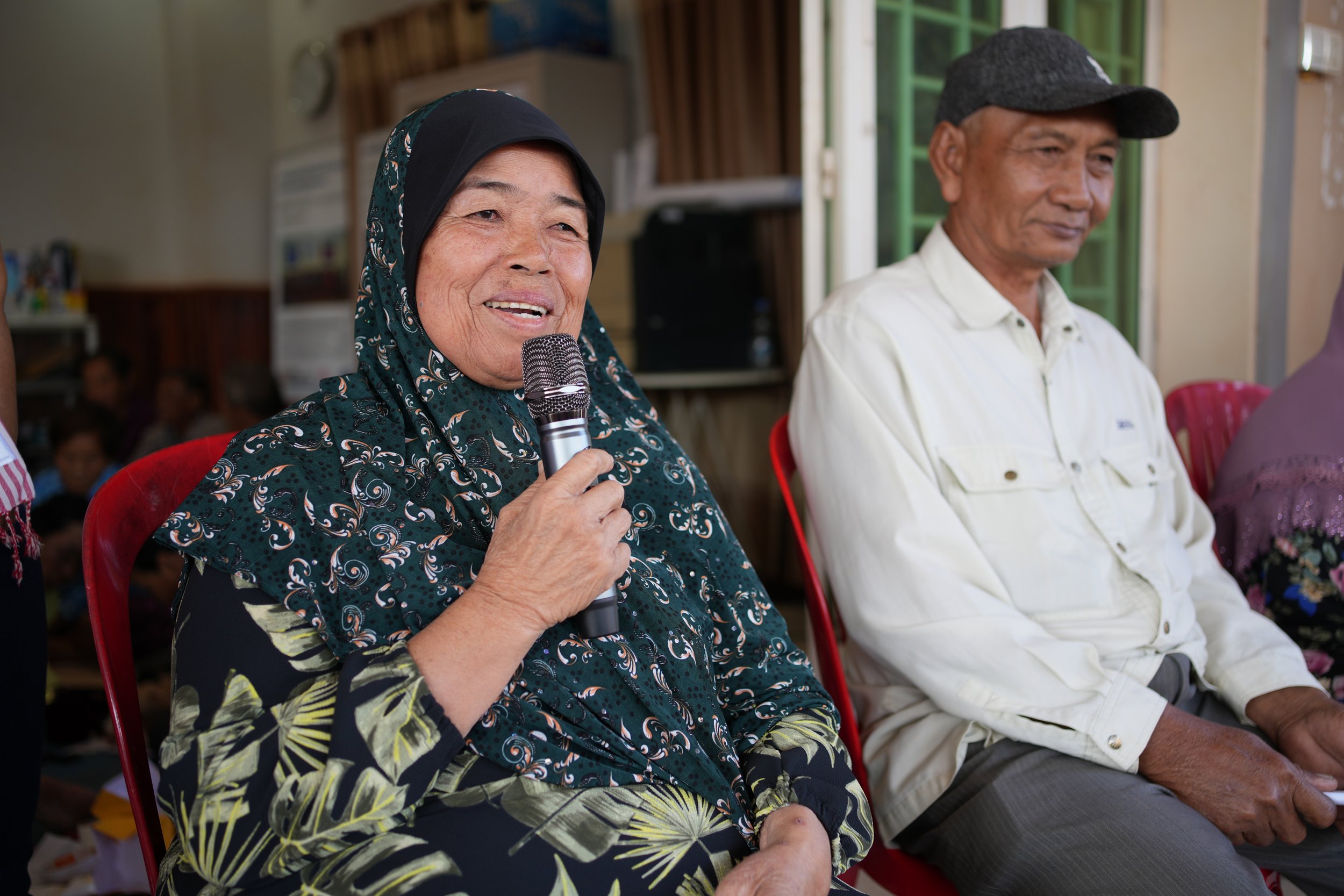
I have just been elected to lead our youth club, and I am eager to begin. I hope to learn about leadership and gender mainstreaming, and to help raise awareness of the violence of the past. Most of all, I want to pass what I learn on to other young people, for the good of my community.
Ms. Uy Minea - youth club leader, Kampot Province
The Mango Seed
Phka Sla Kraom Angkar Mobile Exhibition
A discarded mango seed, left in the sun and rain, takes root and grows to bear fruit again. Written by a young monk during a Kdei Karuna dialogue between youth and survivors of forced marriage under the Khmer Rouge, this poem became an image of survivors' resilience — the capacity to grow strength and life from hardship. It traveled with the Phka Sla Kraom Angkar Mobile Exhibition, carrying survivors' stories into new communities.
The Mango Seed
After a mango is eaten, its seed is thrown away.
Lying on the ground for days and months,
under rays of sunlight,
a new color covers the seed.
Rainfall offers the seed a new destiny.
Again growing, blossoming,
producing fruit,
like all other mango trees.
Just like the mango seed,
you develop strong roots,
you regain strength and power,
from the soil, sun, and rain.
Throughout days and months,
you grow leaves and bear fruit.
Poem by Ven. Phorn Phanoeun — student, National Institute of Social Affairs (NISA)
Youth Perceptions of Sexual and Gender-Based Violence
Intergenerational Dialogue
What happens when young people hear, for the first time, what survivors of sexual and gender-based violence lived through under the Khmer Rouge? Intergenerational dialogue brings the two generations into conversation — creating space for survivors to be heard, for young people to learn, and for both to work towards preventing such violence in the future. In this short film, young participants share what they took away.
STORIES ABOUT “Memory, Dialogue, Justice and Reconciliation”
"We have to support and take care of them to reduce their suffering."
Justice and History Outreach Project
Ms. Man Theany is 15 years old. She lives with her grandmother, who is 70 - a survivor of the Khmer Rouge era. Before participating in the Justice and History Outreach project, their conversations rarely touched on what her grandmother had lived through.
Through structured dialogue sessions at her school in Svay Rieng province, that changed. Ms. Man Theany learned not only about the history of the Khmer Rouge regime, but about how to listen - how to ask questions with care, how to create a safe space, and how to support someone processing painful memories.
She went home and used what she had learned. "We have to deeply learn our own history. If your family members experienced the past regime, we have to support and take care of them to reduce their suffering."
Her grandmother is no longer carrying her story alone. "I want to learn how to collect oral history to share with the next generation."
In a country where so much was deliberately erased, that impulse - to listen, to record, to remember - is itself an act of peace.
"I am like a fish out of water - but I am still here."
GIZ Civil Peace Service Oral History Project
Mr. Houn Sat is 67 years old. He lives in Krang Skear village, Kampong Thom province — not far from where his life was upended as a teenager by the Khmer Rouge regime.
Born in 1956, he grew up in relative stability before the regime forced the evacuation of Phnom Penh in April 1975. He was sent to a labour camp, separated from the structures and relationships that had once defined his life, and put to work clearing forest and farming under constant surveillance.
At nineteen, with no say in the matter, he was assigned a wife in a mass wedding ceremony — one of dozens of couples married in a single ceremony orchestrated by the regime. He did not know her. Neither had chosen this. They were told simply that the marriage "would happen regardless" of what they wanted. "Whether I agreed or not, it was going to happen anyway."
The years that followed brought loss after loss. His mother, his older brother, his younger sister, an uncle, an aunt - all died during the regime, from starvation, illness, or execution. After the regime fell, he continued to lose: a son, taken in a violent incident years later. Survival meant learning to weave bamboo baskets to make a living, carrying grief that had nowhere to go.
Decades later, participating in an oral history project supported by Kdei Karuna and GIZ's Civil Peace Service gave him something he had not had before - a structured space to tell his story, to a young interviewer willing to listen without judgement.
His message to the generation hearing his story for the first time is simple, and hard-earned: "I am like a fish without water - but somehow, I am still here."
STORIES ABOUT Strengthening Voices & Mobilizing Support
From survivor to leader
Interim Reparative Measures Project
When Ms. Teu Ry joined the Interim Reparative Measures project, she could not have imagined where it would take her. As a survivor of conflict-related sexual violence during the Khmer Rouge era, she had lived with the consequences of that history for decades.
Being selected as a member of the Project Steering Committee was a turning point. For the first time, she had a formal role - a seat at the table where decisions were made. Through regular engagement with case managers and local facilitators, she discovered a confidence she had not known before: the confidence to speak, to contribute, and to shape outcomes for others.
Her role also took her beyond the boundaries of her own experience. Visiting survivors in parts of her commune she had never been to before, she found her empathy deepening and her commitment to others growing stronger.
"These visits expanded my perspective and deepened my commitment to supporting others."
"We learned how to speak up for ourselves and for others."
Interim Reparative Measures Project
For most of their lives, the three survivors from Kampot province had not been asked for their opinion. They had lived through the Khmer Rouge regime, carried its consequences for decades, and navigated a world that had largely moved on without acknowledging what they had endured.
In June 2026, that changed in a new way. As representatives of the survivor community supported through the Interim Reparative Measures project, they travelled to Phnom Penh to participate in a five-day training on mobilizing support - organized by the Advocacy and Policy Institute (API).
For five days, they learned how to identify problems, develop solutions, and engage with the stakeholders and decision-makers who shape the systems that affect their lives. They arrived as survivors. They left as advocates.
Their participation is part of a broader commitment within the IRM project: that recognition and healing are not enough. Survivors should also have the knowledge, the confidence, and the tools to speak - for themselves, and for others like them.
“The Confidence to Lead”
Interim Reparative Measures (IRM) Project
For many years, I carried the disappointment of the opportunities taken from me during the Khmer Rouge regime. Through the IRM project, I took part in training on leadership, advocacy, facilitation, and digital skills — and rediscovered abilities I did not know I still had. Today, I help organise activities for my village's Older People's Association and share ideas that support other survivors. What began with uncertainty has become a source of pride: the project helped me regain confidence, purpose, and a sense of achievement.
Mr. Choek Vanna — Khmer Rouge survivor, Kampot Province