GENDER JUSTICE, YOUTH & EDUCATION
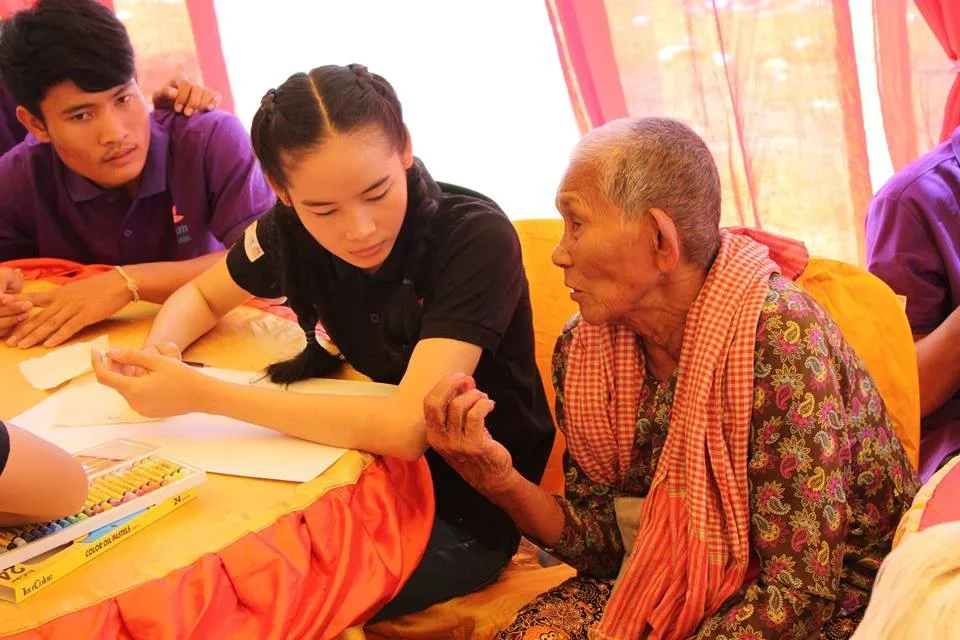
The last survivors of this history are ageing; the young people who will carry it forward are in school now. Here we turn a painful past into prevention — equipping students, teachers, and communities with the awareness and skills to recognise injustice and refuse to repeat it.
Explore the projects in this area below.
Gender Justice through Learning and Reflecting on SGBV during the Khmer Rouge
Since 2022 · Supported by the Heinrich Böll Stiftung (HBS)
Sexual and gender-based violence during the Khmer Rouge regime remains one of the least acknowledged legacies of that era. Decades later, survivors continue to live with the physical and emotional consequences of what they endured — while the history of this violence remains largely absent from classrooms and community conversations.
Kdei Karuna works to break this silence. Through community-based youth clubs in four provinces — Kampot, Kep, Battambang, and Oddar Meanchey — young people are equipped with the knowledge, skills, and confidence to engage with this difficult history and become advocates for gender justice in their own communities.
This work has grown over several years. Since 2022, Kdei Karuna has worked with schools and teachers to bring the history of SGBV into the classroom — training teachers of history, literature, and civics, supporting student-led dialogues, and running a public "Say NO to SGBV" talk-show series. Out of this grew the school-based youth clubs that now lead the work themselves.
Young people as change-makers
Youth club members receive training in dialogue facilitation, oral history collection, and basic emotional and social support — practical skills that enable them to lead meaningful conversations with peers, families, and community members. Many describe a transformation in how they understand their own history and their role in shaping their community's future.
As one youth club leader from Kep reflected: "I gained knowledge of Khmer Rouge history and its impacts on gender, which makes me proud to promote peace and gender equality in my community."
Breaking the silence together
At the heart of the project are intergenerational exchanges between survivors and young people. Survivors are invited to share their testimonies in safe, structured settings — and many describe the experience as deeply meaningful.
As one survivor from Oddar Meanchey shared: "Being heard so attentively by young people has helped me find a sense of relief. I want the next generation to live in a peaceful society with gender equality."
Change that lasts
The program builds advocacy from the ground up. Youth clubs are community-rooted, locally facilitated, and increasingly self-sustaining — with members continuing their work even as they move on to further studies. Local authorities and school principals have actively supported the initiative, opening classrooms for workshops and encouraging broader youth participation.
Pka Sla Kraom Angkar
ECCC reparations project (Case 002/02)
Acknowledgement and healing for survivors of forced marriage – finished
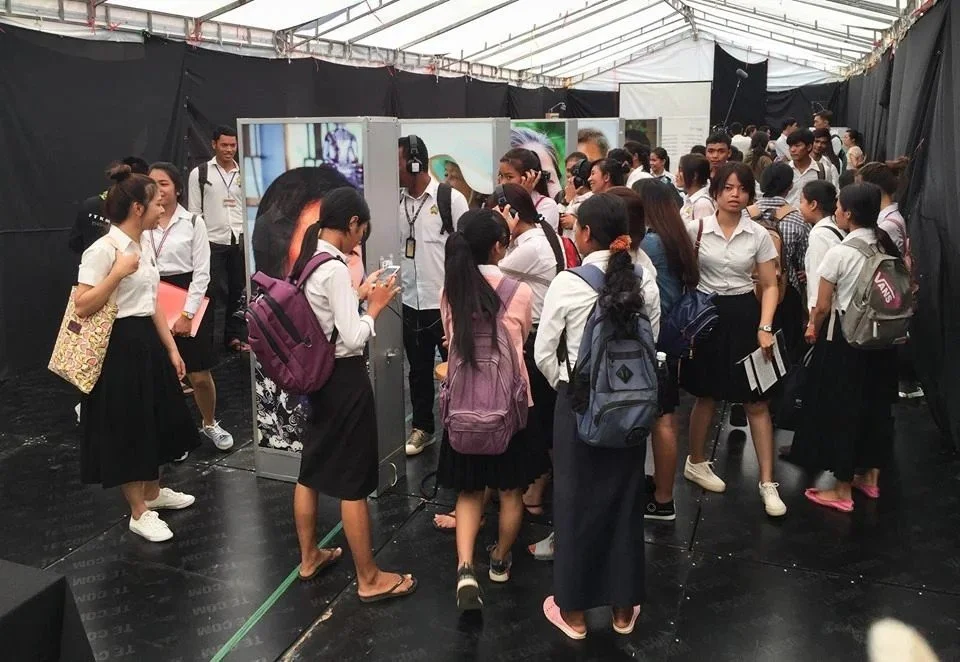
Pka Sla Kraom Angkar was the only judicial reparations project at the ECCC to address the harm suffered by survivors of forced marriage under the Khmer Rouge. It brought together four organizations — Kdei Karuna, Khmer Arts, Bophana, and TPO Cambodia — to make the tribunal's historic hearings on sexual and gender-based violence accessible to communities. Across eleven provinces, the project combined a mobile exhibition, oral history collection, and intergenerational dialogue between survivors and young people. It reached 276 Civil Parties, nearly 1,500 Khmer Rouge survivors, close to 3,000 students, and almost 5,000 exhibition visitors, and was supported by USAID and ifa.
Working across the Khmer Rouge Past for Non-Recurrence
Teaching the history of SGBV, torture, and ethnic violence in schools and communities – finished
Cambodia's school curriculum touches only briefly on the Khmer Rouge period, and barely at all on sexual violence, torture, or the treatment of ethnic minorities. Across seven provinces and Phnom Penh, Kdei Karuna trained more than 1,450 young people and over 300 high school teachers in Khmer Rouge history, trauma awareness, nonviolent communication, and oral history, and brought students and survivors together in intergenerational dialogue. Working with local authorities and state actors, the project widened the space in which this difficult history can be discussed. Supported by the European Union through UNOPS.
Gender Justice through Intergenerational Dialogue and Participatory Research
Bringing the history of SGBV into teacher training · In formal partnership with the Ministry of Education, Youth and Sport – finished
If the history of sexual and gender-based violence under the Khmer Rouge is to reach classrooms, it has to reach the people who teach in them. In formal partnership with the Ministry of Education, Youth and Sport, Kdei Karuna worked with Regional Teacher Training Centres in Takeo, Kampong Cham, Battambang, and Kandal to bring survivors, teachers, and teacher trainees into dialogue — combining training on Khmer Rouge history, SGBV, and basic mental-health support with reflection on how this violence shapes gender relations today. Supported by the Heinrich Böll Stiftung.