MEMORY, DIALOGUE, JUSTICE & RECONCILATION
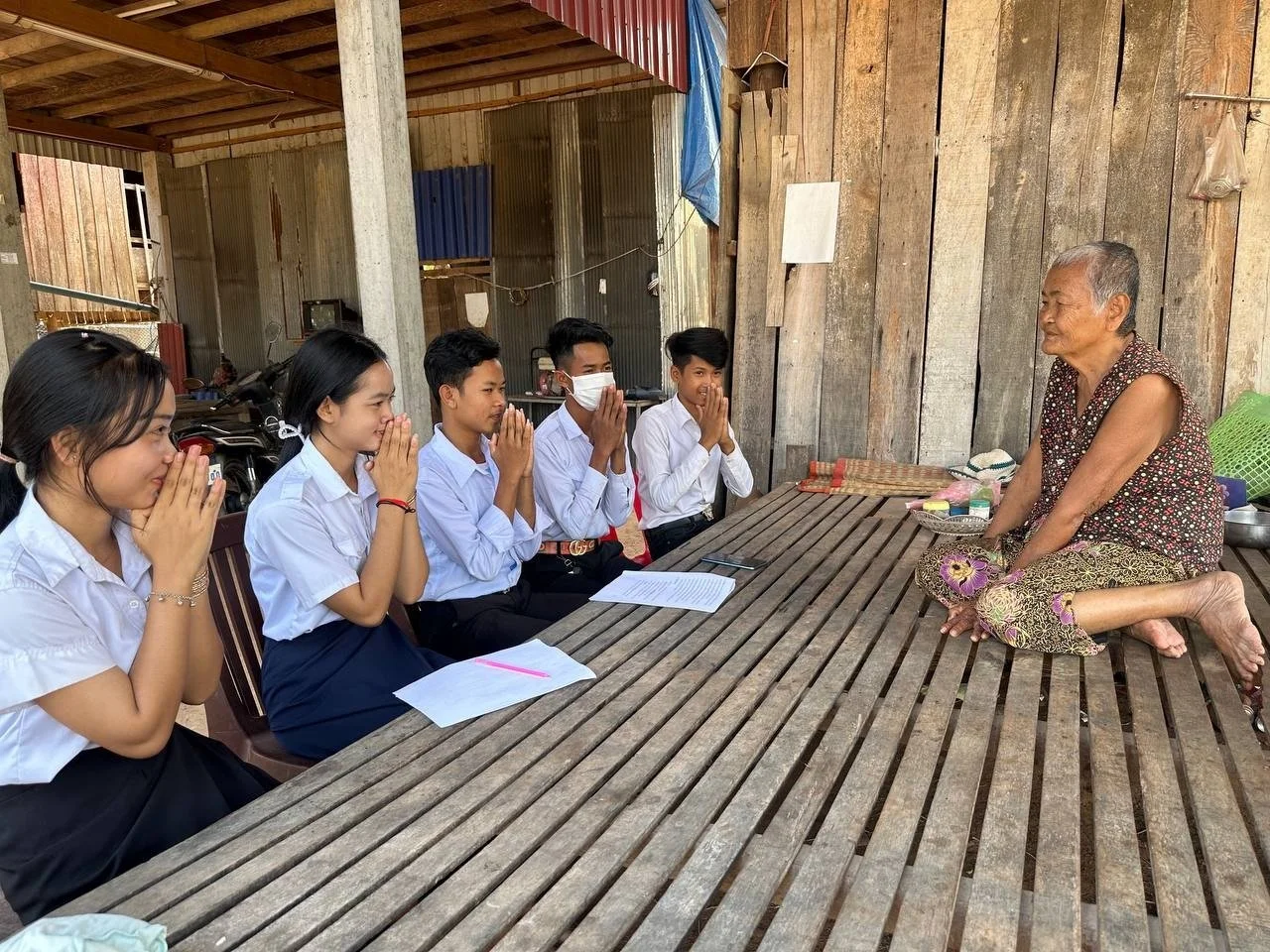
Much of what is known about the Khmer Rouge era remains far from the communities most affected by it. In this area we help make that history accessible and speakable again — connecting survivors and younger generations so the past can be understood rather than avoided.
The project below shows how this work takes shape in practice.
Dialogue for Learning and Healing: Transitional Justice After the ECCC
Justice and History Outreach (JHO) – Together Dealing with the Khmer Rouge Past After the ECCC | In partnership with TPO Cambodia and the ECCC | Supported by the Deutsche Gesellschaft für Internationale Zusammenarbeit (GIZ)
The Extraordinary Chambers in the Courts of Cambodia (ECCC) spent 15 years documenting the crimes of the Khmer Rouge regime. When the tribunal closed, a vast archive of testimony, evidence, and historical record remained — largely inaccessible to the rural communities most affected by the violence it documented.
Together with TPO Cambodia and the ECCC, Kdei Karuna operates the Mobile Resource Center — bringing the findings of the tribunal directly to the people whose lives were shaped by this history, in their own language, in their own communities.
Connecting generations
For many young Cambodians, the Khmer Rouge era is distant history — something encountered briefly in a textbook. For survivors, it is lived memory they have rarely been invited to share.
Through structured intergenerational dialogue, students and young teachers sit with survivors to listen, ask questions, and reflect together. Many young participants describe it as transformative — a conversation that no classroom could replicate.
Healing through being heard
Open dialogue is not only educational — it is restorative.
Survivors who participate in exchanges with youth report a profound sense of emotional relief. Being actively listened to, and having their experiences acknowledged by the next generation, reduces the isolation that many have carried for decades. As one survivor from Kampong Thom shared: "I felt excited to share my experiences. I want to send a message to the next generation to remember my suffering and ensure that such a regime never happens again."
Communities as peacebuilders
The project's impact extends beyond individual conversations.
Young participants take what they have learned home — initiating dialogue with their own families, practicing oral history with their grandparents, and sharing facilitation skills with peers. In doing so, they become informal peacebuilders in their own communities, keeping the lessons of the past alive and relevant.
Voices from Ethnic Minorities
ECCC reparations project (Case 002/02)
Raising awareness of Cham and Vietnamese experiences under the Khmer Rouge – finished
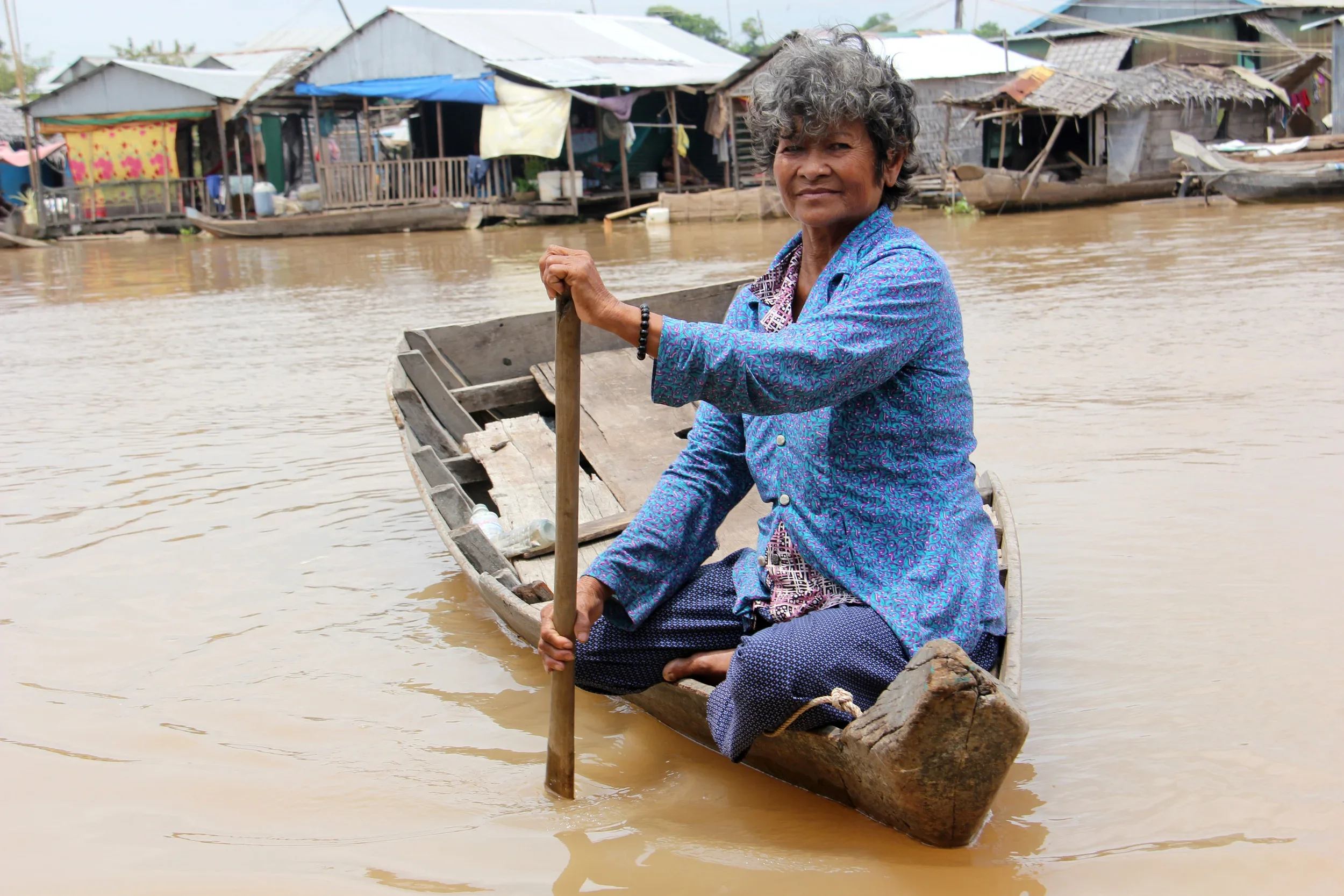
To promote acceptance of Cambodia's diverse identities, Kdei Karuna documented the histories and life stories of ethnic Cham and Vietnamese communities through oral histories, ECCC footage, and archival material, sharing them with the public through a mobile exhibition. As a reparations project of the Extraordinary Chambers in the Courts of Cambodia (ECCC), it brought Khmer, Cham, and Vietnamese Civil Parties and survivors together in intergenerational dialogue, giving those who faced ethnic violence and discrimination a platform to share their experiences and receive public acknowledgement. Implemented across four provinces with support from GIZ Civil Peace Service.
Mobile Exhibition on Forced Transfer
ECCC reparations project (Case 002/01)
Bringing the history of forced population transfers to affected communities – finished
The mass transfers that emptied Cambodia's cities are among the least discussed experiences of the Khmer Rouge era. As a judicial reparations project in ECCC Case 002/01, Kdei Karuna brought a mobile exhibition to the provinces where these events took place, pairing it with intergenerational dialogue, art workshops, and forum discussions. Civil Parties, monks, and thousands of visitors engaged with a history that had rarely been spoken about publicly.
Community Truth-Telling
Bringing former cadres and young people together in oral history and memory work · Supported by ifa – finished
Across two phases, Kdei Karuna brought former Khmer Rouge cadres and young people together to create safe spaces for learning and to rebuild relationships within families and communities. Young participants, supported by local facilitators, collected survivors' life stories — resulting in thirty oral histories published in 2023 — and went on to form youth-friendly clubs across four provinces: Kep, Kampot, Battambang, and Oddar Meanchey. Through these clubs they led their own activities, from oral history and study visits to historical sites to painting alongside survivors and public forums on Cambodia's past.
Victim and Former Khmer Rouge Cadre Dialogue
Direct dialogue between survivors and the perpetrators living among them · With TPO Cambodia – finished
One of Kdei Karuna's earliest reconciliation projects. In a commune in Kampot, a survivor group and a former cadre came into contact — first through an exchange of video messages, then face to face at the village pagoda, once a Khmer Rouge prison. The process led to acknowledgement and a shared decision to build a memorial stupa, and explored what reconciliation between victims and their direct perpetrators can realistically mean.
Justice & History Outreach: Dialogue across Generations
Youth, alumni, and survivors continuing the work of dealing with the past · Supported by GIZ Civil Peace Service · – finished
Across several phases, Kdei Karuna deepened its intergenerational dialogue work in Pursat, Kampong Cham, and Phnom Penh. Young people — many of them alumni of earlier Kdei Karuna projects — were trained in oral history, nonviolent communication, and facilitation, then led their own youth–survivor dialogues and study visits to sites of memory in their communities. The work also developed teaching resources, including an oral history collection manual for high school teachers, helping carry Khmer Rouge history education forward through a new generation.