
ABOUT US
Kdei Karuna is a Cambodian peacebuilding organization working to strengthen dialogue, social trust, and reconciliation in communities affected by conflict, violence, and historical trauma. For more than 20 years, we have worked alongside survivors of the Khmer Rouge regime, young people, educators, and community leaders to address the legacies of conflict and build more inclusive, resilient communities across 22 provinces in Cambodia.
Our work spans survivor support — with particular focus on survivors of the Khmer Rouge regime, including survivors of conflict-related sexual violence — gender justice, intergenerational dialogue, social cohesion, and the empowerment of survivors, youth, and local facilitators. A network of dedicated local facilitators anchors our presence in communities, ensuring that programs remain responsive to local needs and grounded in genuine local ownership.
OUR APPROACH
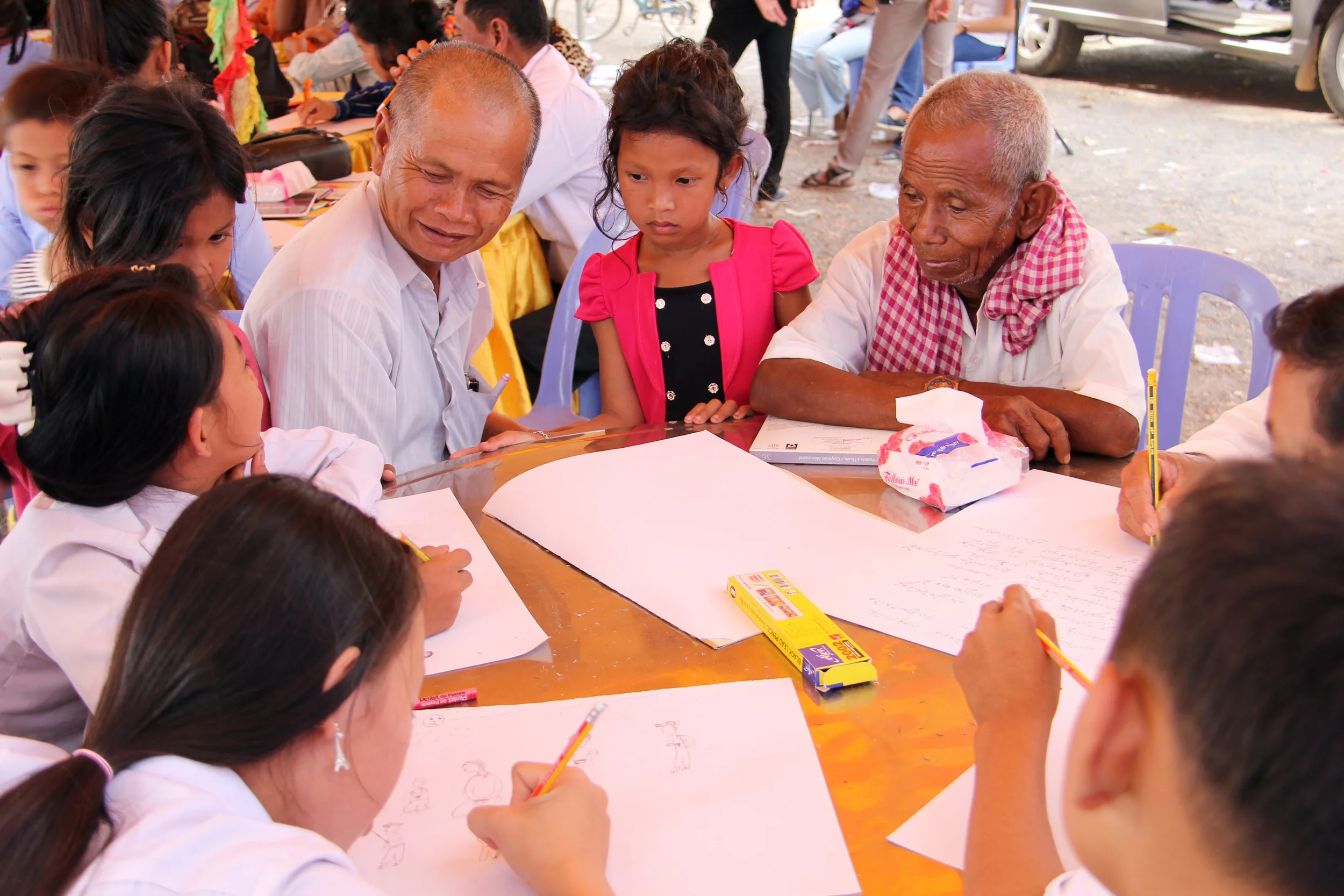
We place survivors at the center of everything we do. Empowerment runs through everything we do: we strengthen the confidence, skills, and leadership of survivors, youth, and local facilitators so they can drive change in their own communities. Those most affected by conflict should actively shape the processes of recognition, justice, and healing - not simply receive them. Drawing on transitional justice principles, we support communities through history education, memorialization, intergenerational dialogue, and community-led healing rooted in local culture and tradition, helping them address the past while building a more peaceful future.
OUR HISTORY
Kdei Karuna - meaning "compassionate action to heal" in Sanskrit - began in 2005 as part of the International Center for Conciliation, applying dialogue-based methods to support Cambodians in processing the deep wounds of the Khmer Rouge era. As our understanding of community needs evolved, so did our methods. In 2010, we registered as an independent Cambodian NGO - a step that reflected our commitment to locally led, sustainable peacebuilding. In 2023, our Executive Director was named a Champion of Prevention (Raphael Lemkin Champion) by the UN Office on Genocide Prevention, recognizing over a decade of Kdei Karuna's work on healing and atrocity prevention.
VISION
An inclusive peaceful society.
MISSION
To build a peaceful future in which dialogue and social trust are strengthened, and a collective transformation of the meaning of a just society achieved, based on understanding and reconciliation with the past.
VALUES
Diversity and Harmony Dignity and Equality Support and Collaboration Efficiency and Effectiveness Sustainability and Ownership